Microrealism
Microrealism: What it looks like, and where you have probably seen it
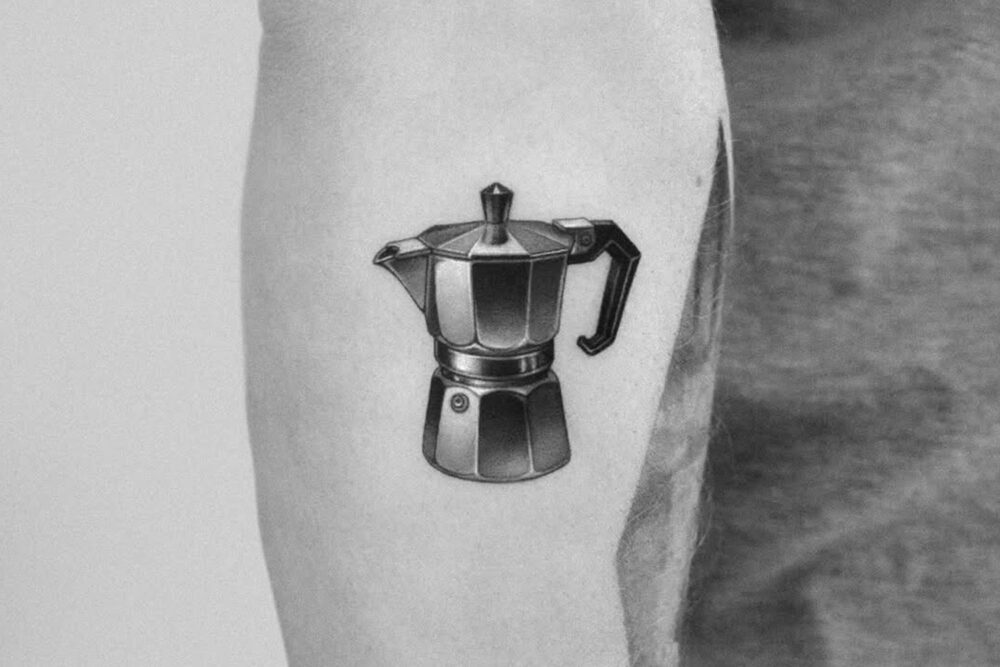
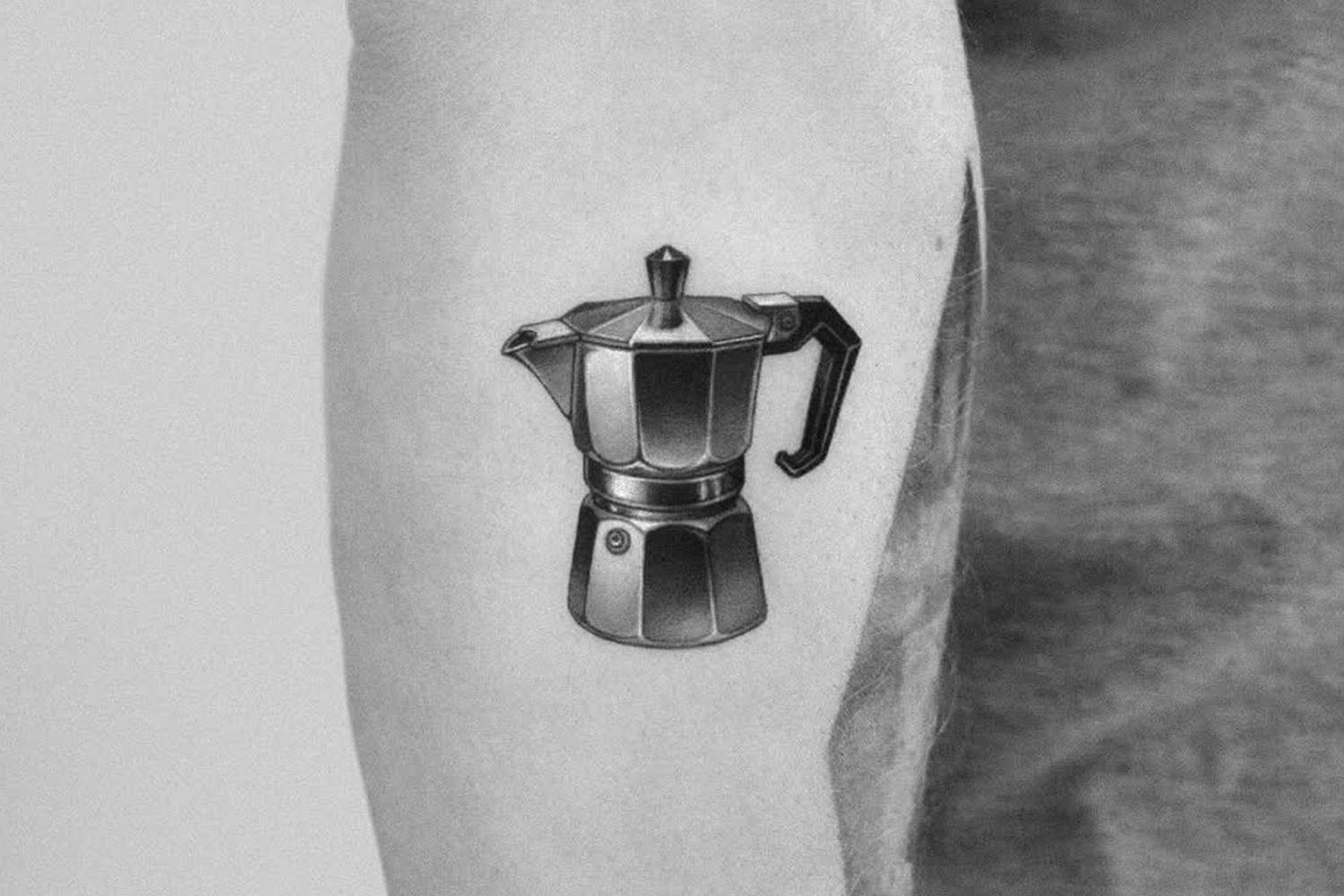
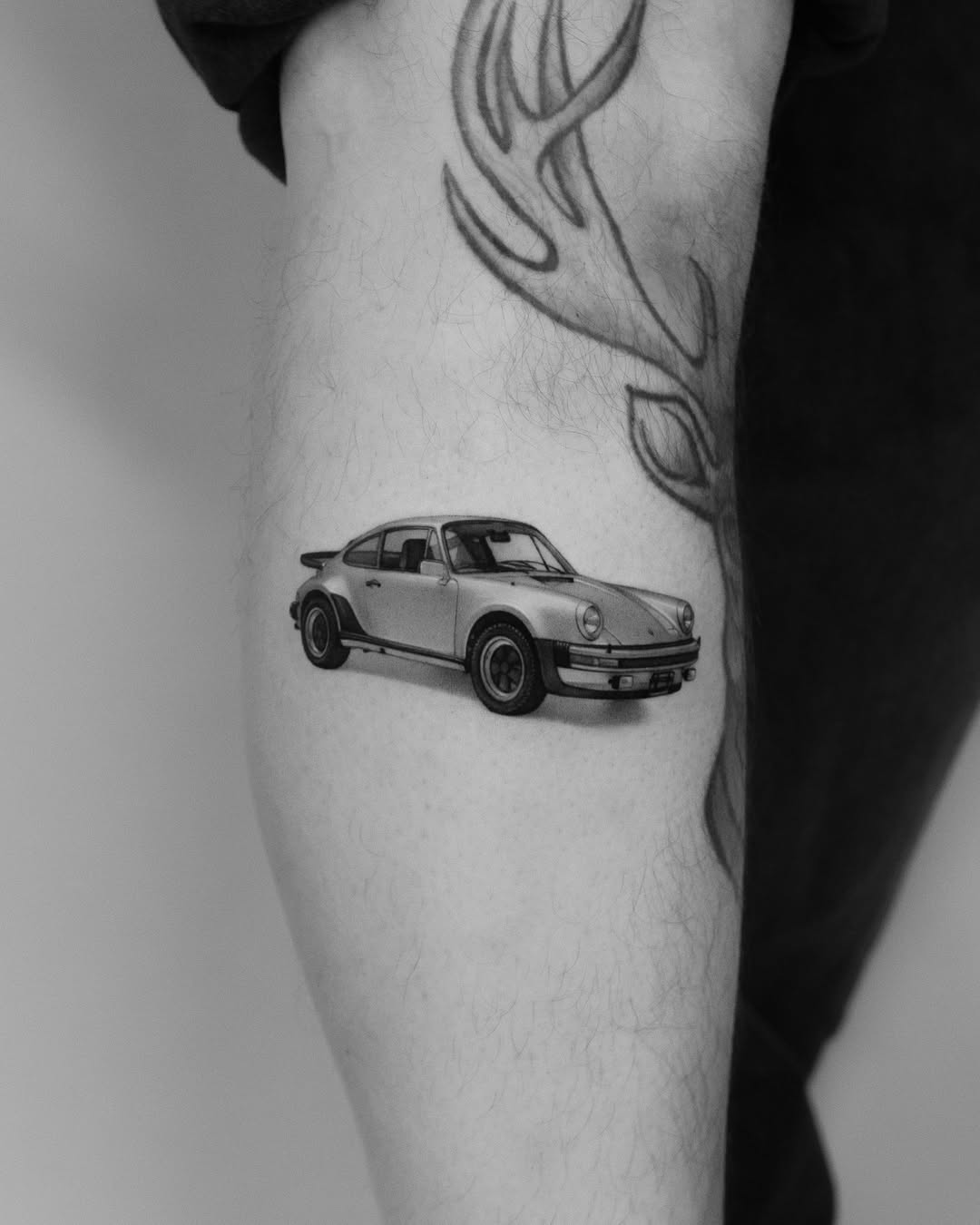
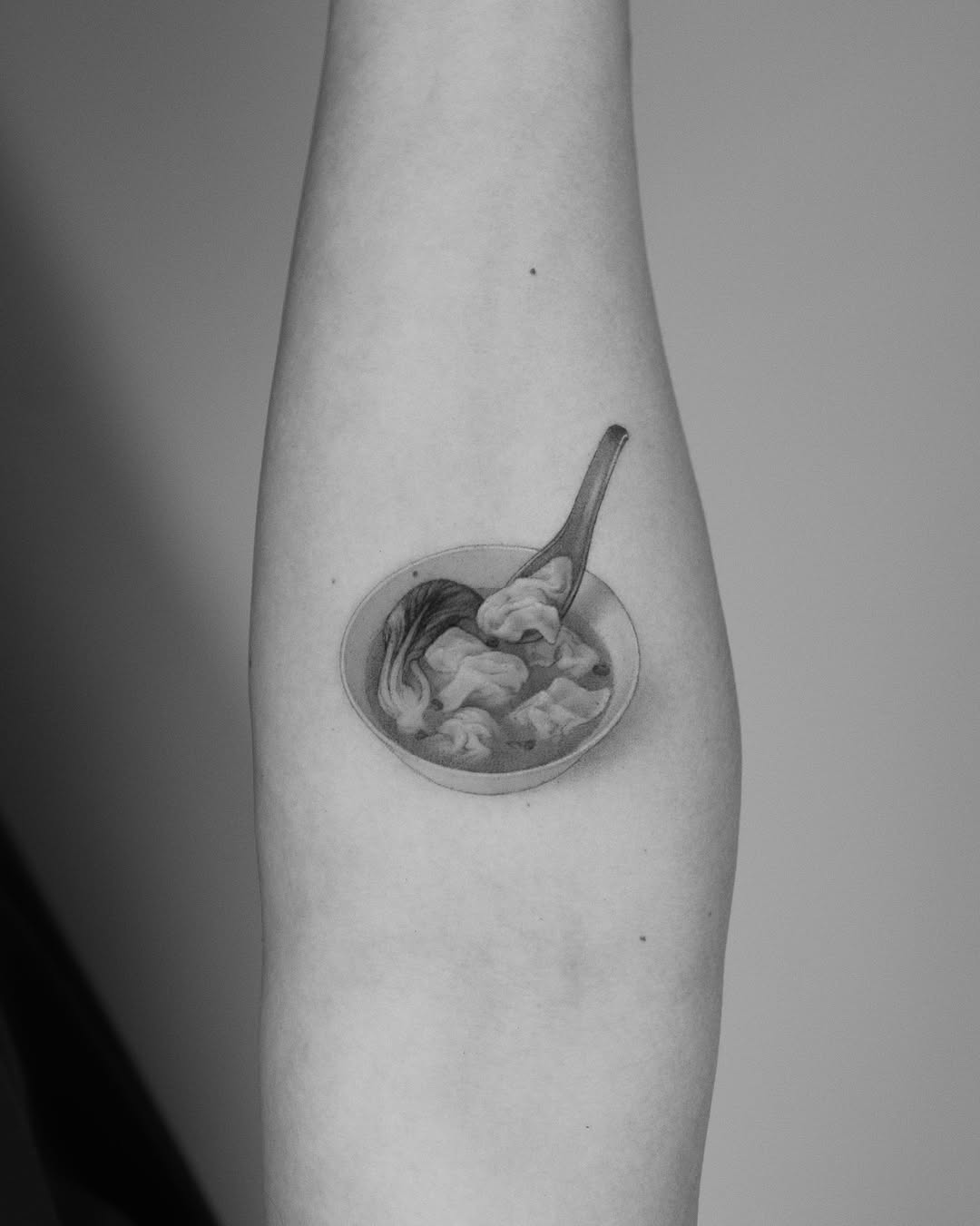
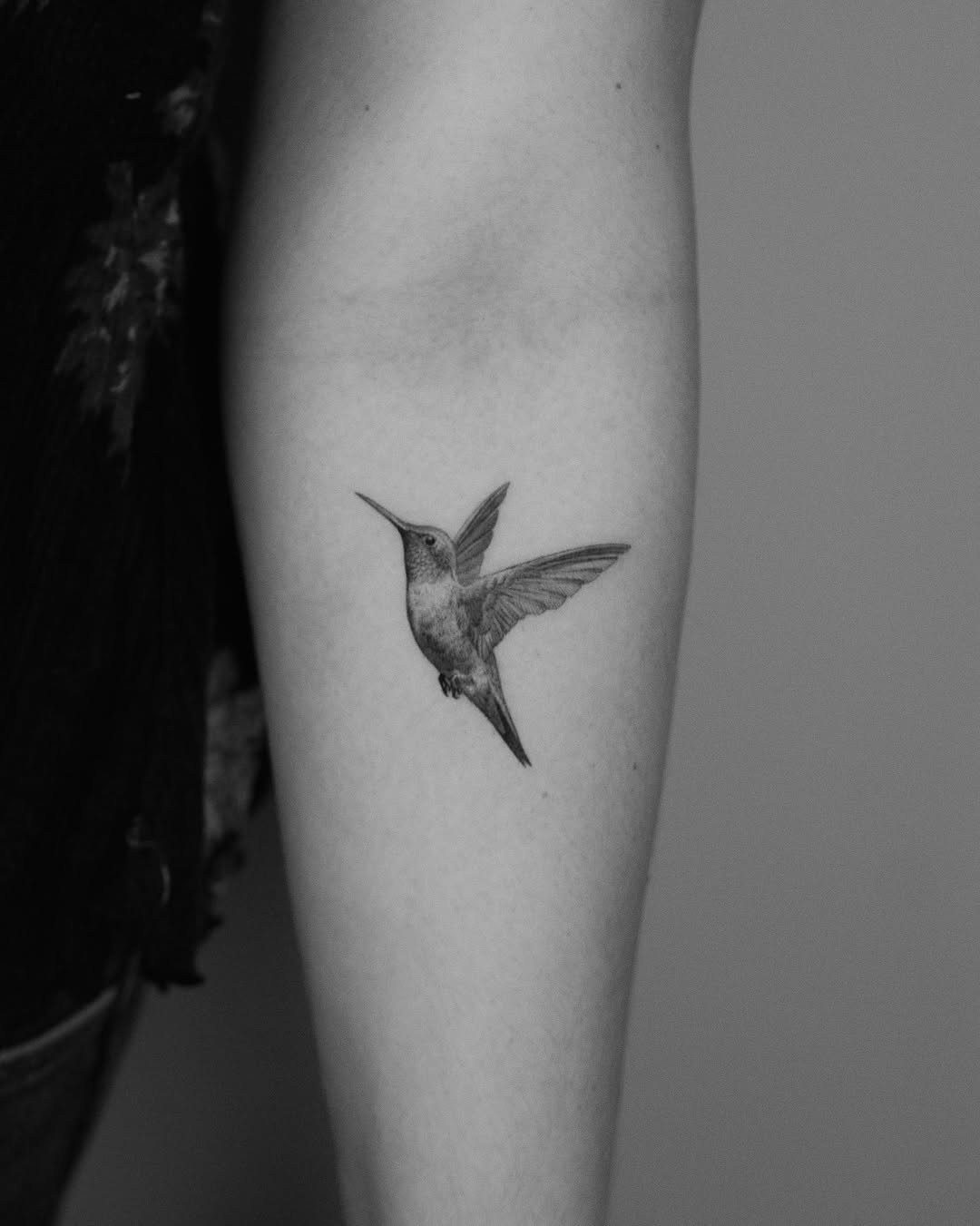
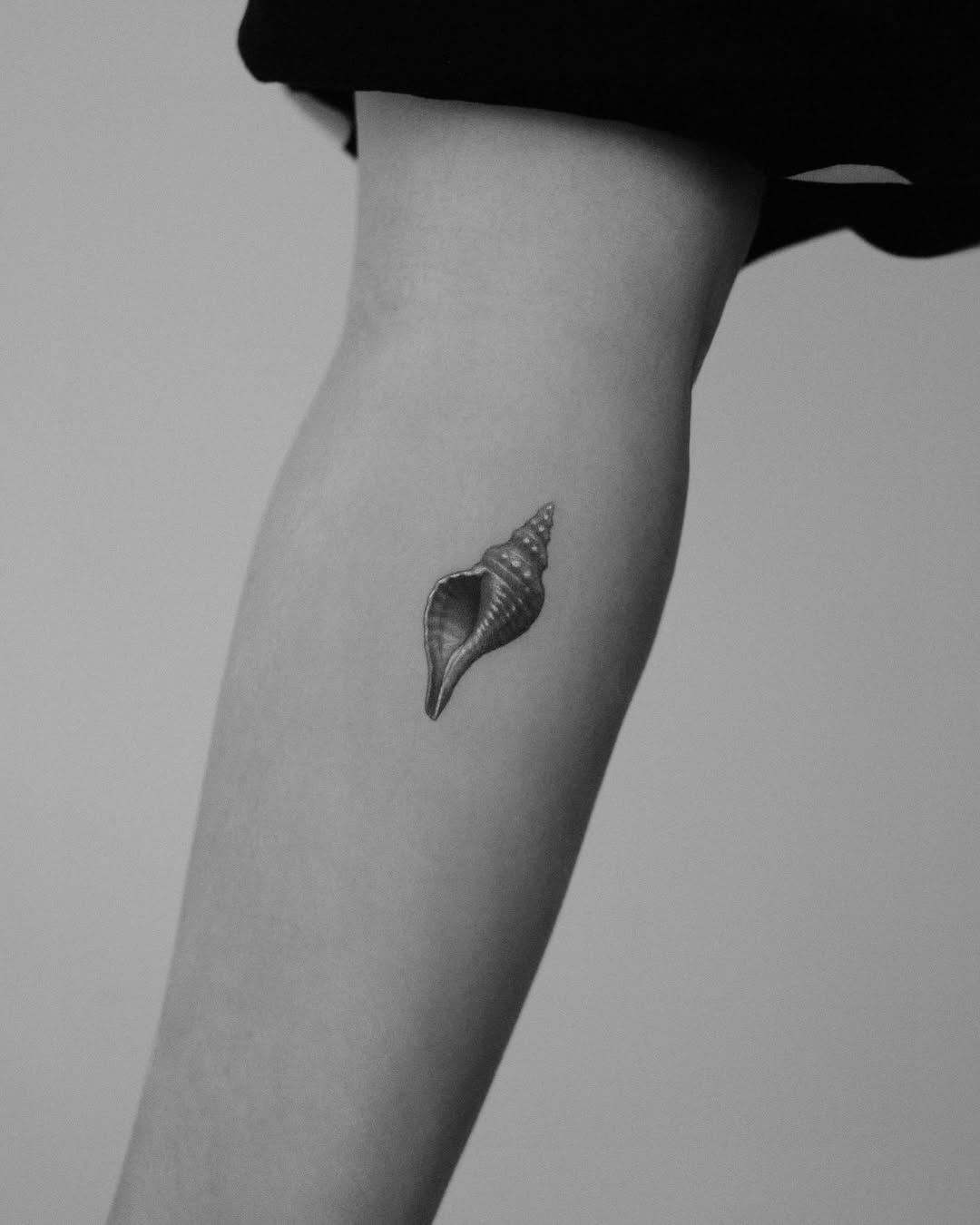
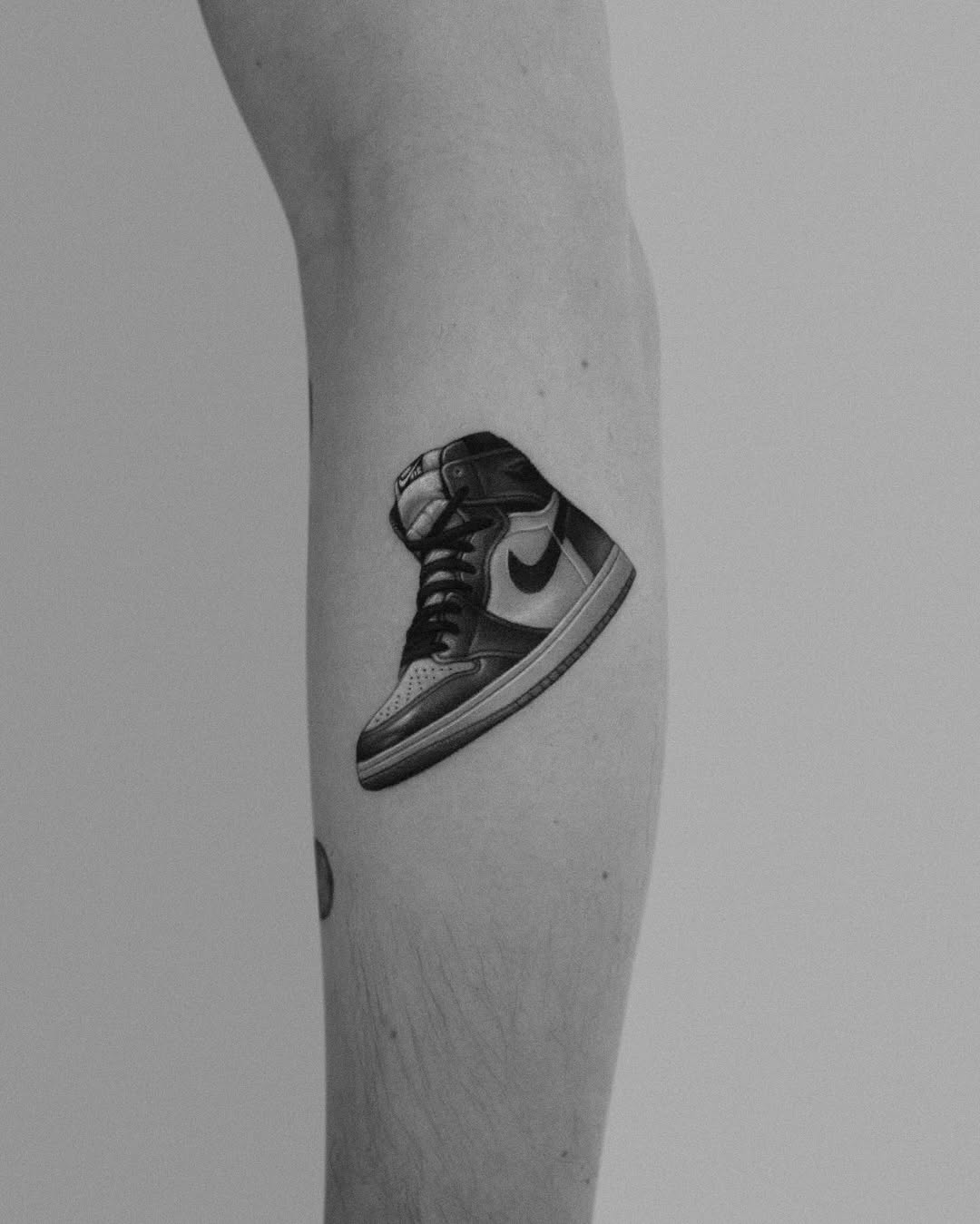
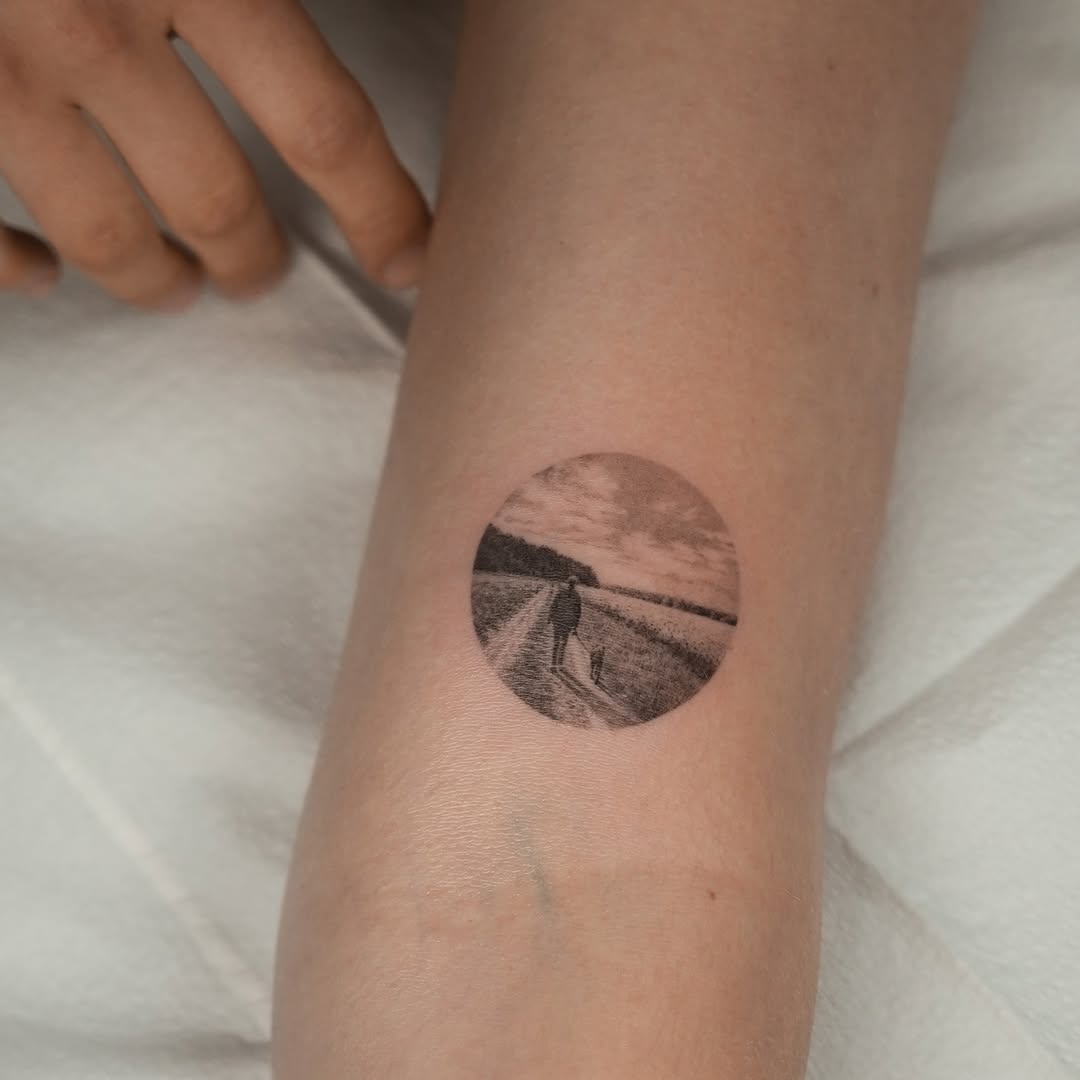
A tiger’s face the size of a postage stamp, rendered in fine grey tones with every whisker individually drawn, is placed on the inside of a forearm next to a date in delicate script. A portrait of a grandmother, an inch and a half (4cm) tall, on the back of an upper arm. A hummingbird smaller than a thumbprint, hovering in front of a flower no larger than a fingernail. These are micro-realism tattoos, and they are one of the most characteristic tattoo styles of the 2020s — visible across social media, concentrated in specific studios in Seoul, Los Angeles, New York, London, and Barcelona, and requested by a clientele that is often getting tattooed for the first time.
The style sits at the intersection of two trends: the long technical development of photographic realism in tattooing, and the more recent preference for small, discreet, placement-sensitive work that reads well in phone photography. Understanding micro-realism requires understanding both of those strands and the technical shift that made the combination possible.
The realism tradition in brief
Mainstream realism through the 2000s tended to work at medium to large scales — portraits the size of a hand or larger, big-cat pieces filling half a calf, full-sleeve compositions. The reasoning was mechanical: realism depends on tonal detail, and detail needs room. A small realism piece in the vocabulary of the 1990s and 2000s was understood to be a compromise, accepted only when the client insisted.
Micro-realism represents a deliberate move in the opposite direction — an attempt to hold the tonal and representational standards of realism while working at a scale that the earlier generation of realism artists generally refused to attempt.
What changed
Three technical developments enabled the style.
The first was the refinement of ultra-fine needle configurations. Single-needle setups have existed in tattooing for decades, primarily in the Chicano tradition. Still, the commercial availability of precision cartridge needles in the 2010s made single-needle and three-needle round-liner work much more accessible. Modern cartridges allow the artist to work with needle groupings that deposit ink in very small, consistent amounts, which is the mechanical prerequisite for detail at a small scale.
The second was machine evolution. Contemporary rotary machines — particularly pen-style rotaries that became widely used from the mid-2010s onward — produce less skin trauma than older coil machines and allow finer control over needle depth. Less trauma means less bleeding, less swelling, and less blurring of fine detail during and immediately after application.
The third was pigment refinement. Modern black inks are more stable and more consistent than the pigments available to earlier generations, and the tonal dilutions used in fine greywash now behave more predictably on skin. This matters more at the small scale than at the large, because a small error in pigment behaviour is proportionally much larger in a one-inch piece (2,5cm) than in a six-inch (15cm) piece.
None of these developments was exclusively responsible for the style, but together they made micro-realism technically feasible in a way it had not been a decade earlier.


What counts as microrealism
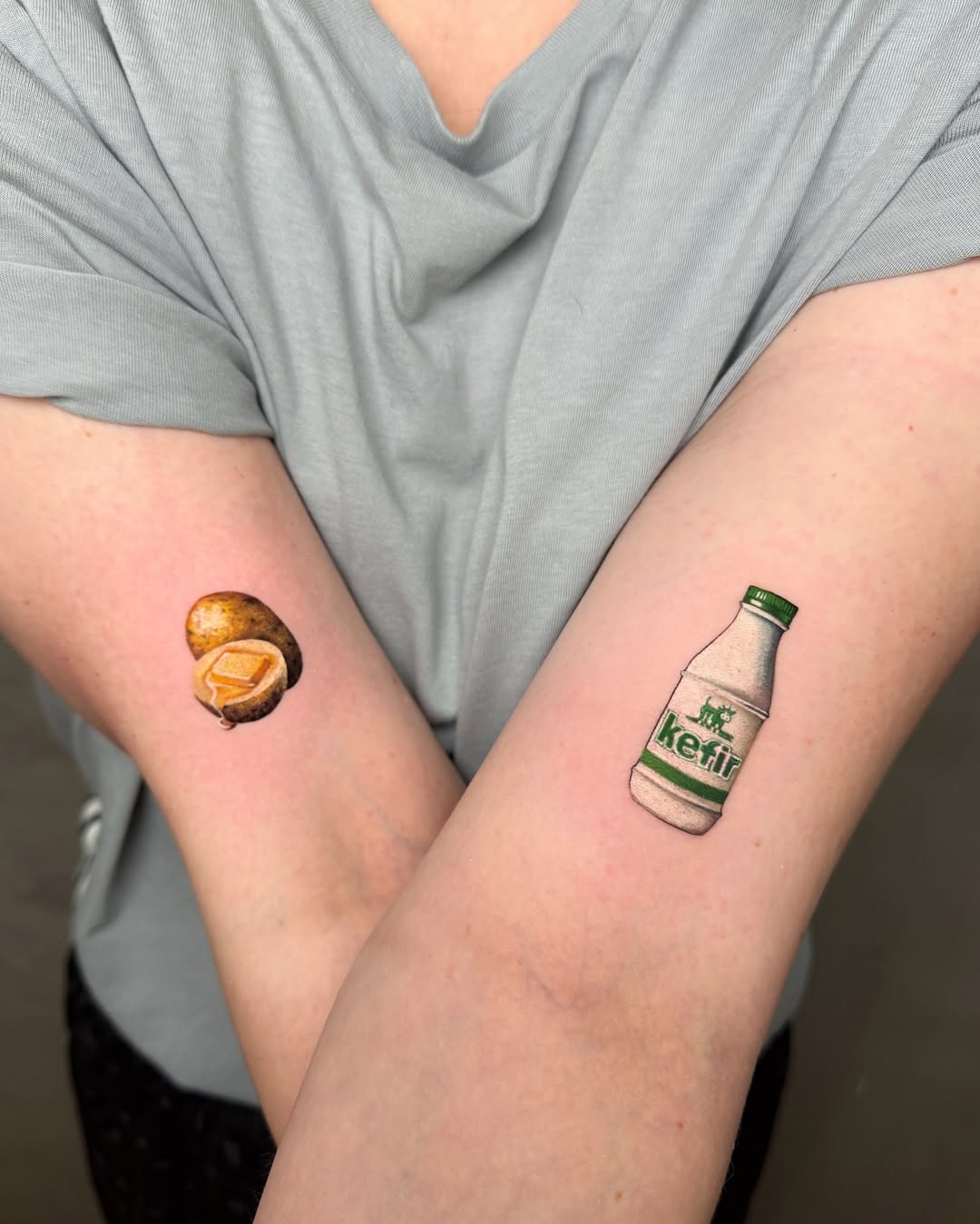
The term is used loosely. At one end of the spectrum, “micro-realism” describes any realism tattoo below roughly three inches (7,5cm) in its longest dimension. At the other end, the term is applied to pieces an inch (2,5cm) or less — a scale at which only a few artists work seriously, and at which most work of any kind struggles to last.
A workable definition for editorial purposes: micro-realism is realism rendering — tonal, representational, drawn from a reference image or object — executed at a scale small enough that the standard realism approach would not work without significant adaptation. The adaptations are the interesting part of the style, and are discussed below.
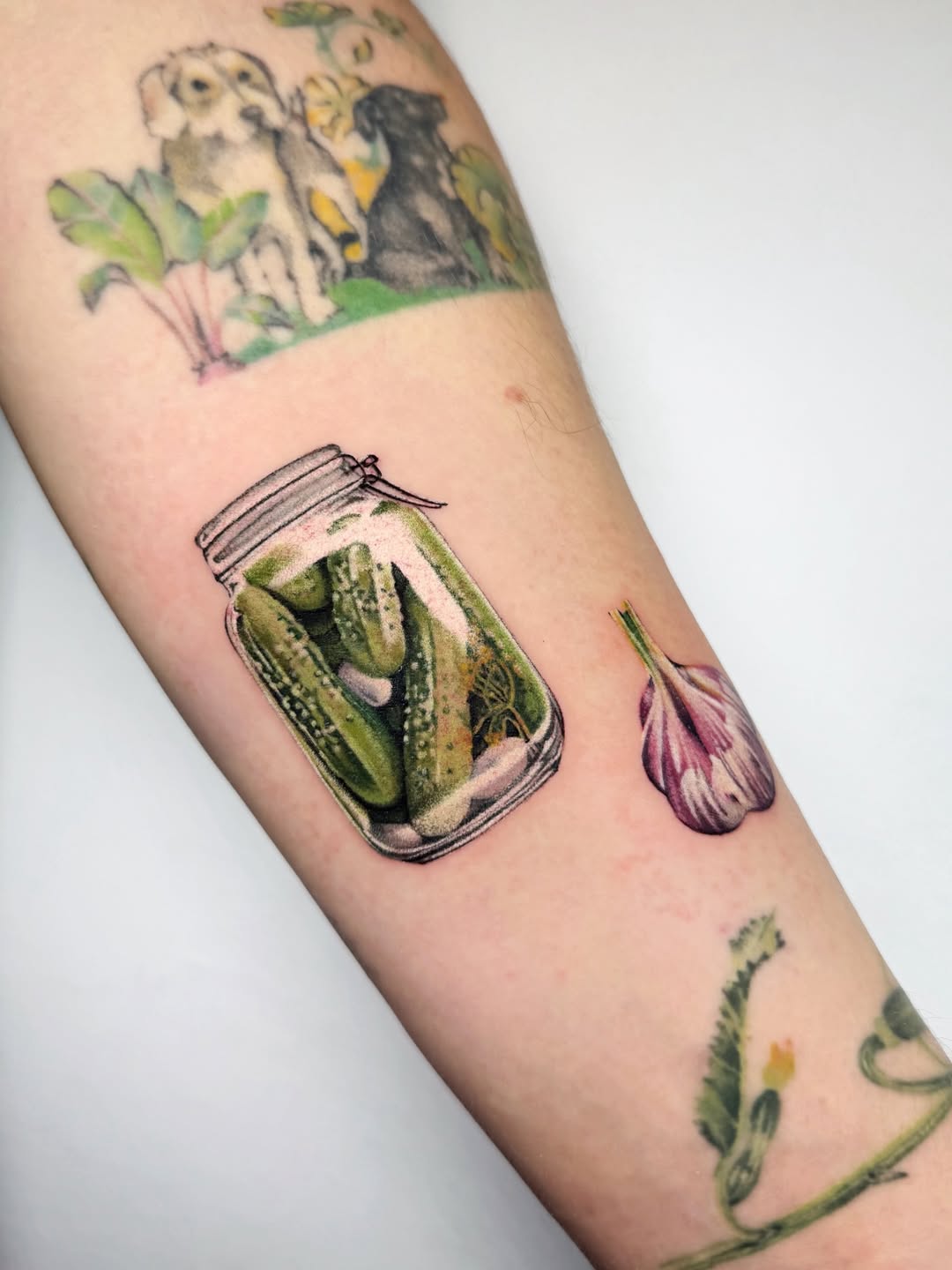
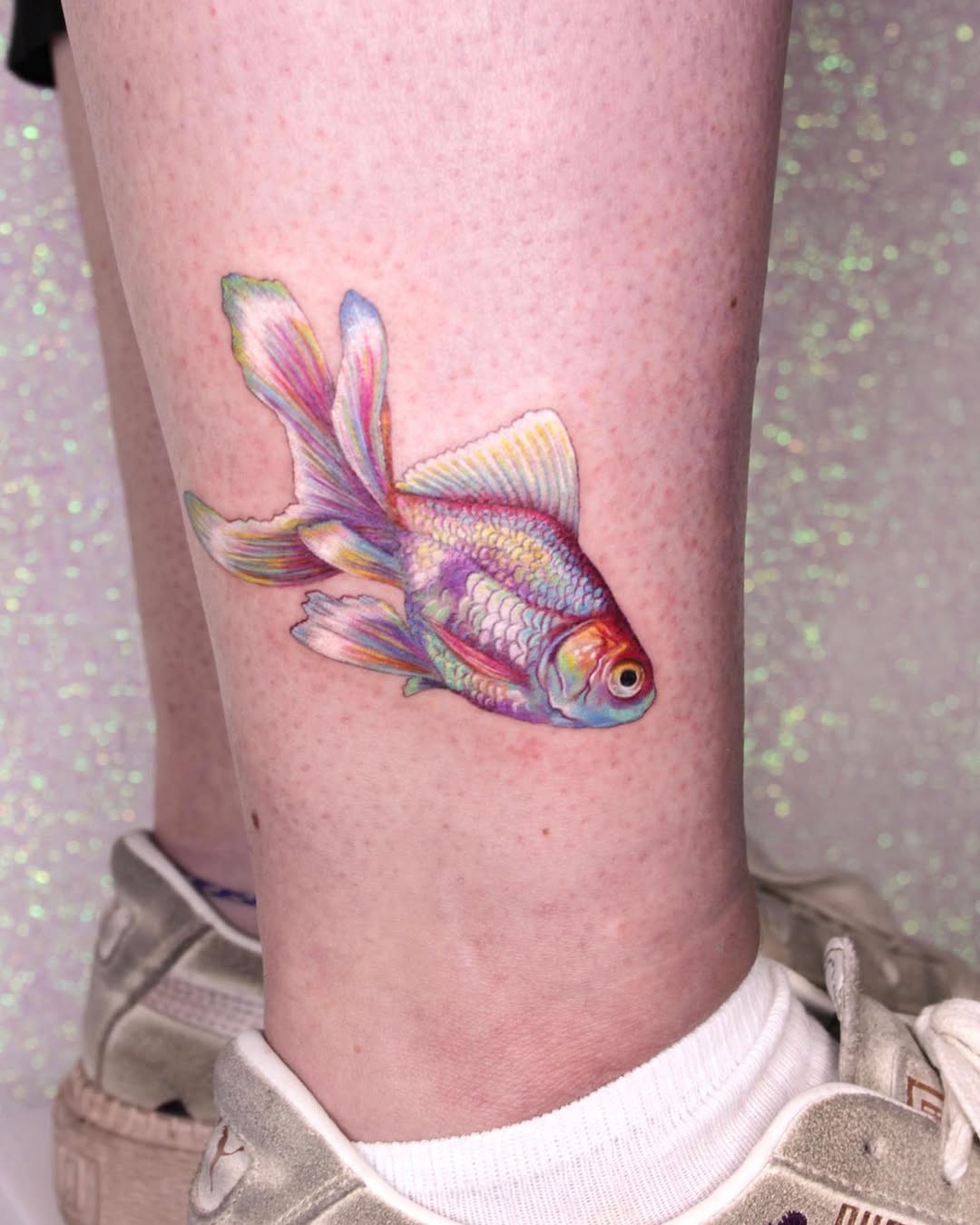
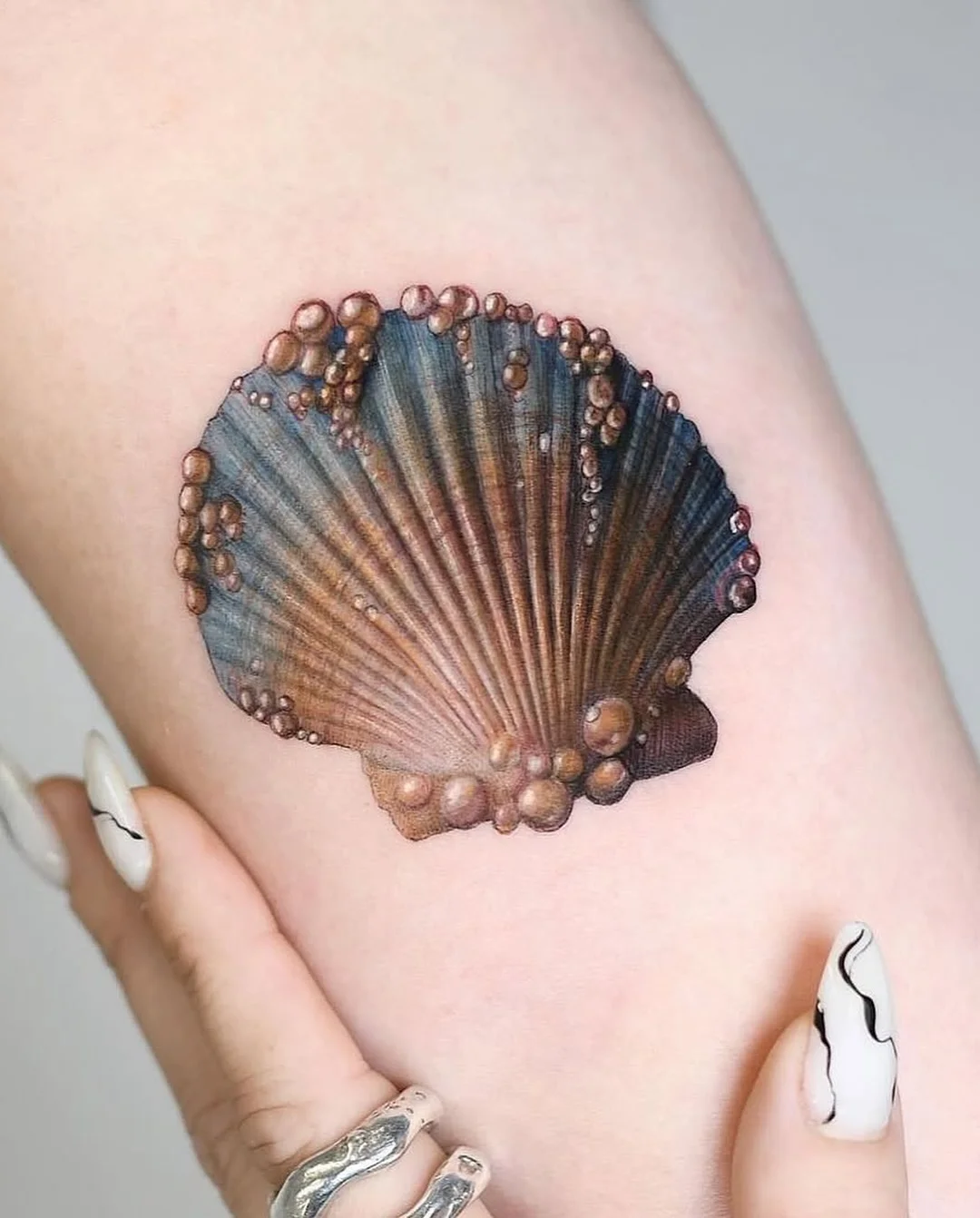
The style is usually, but not always, black-and-grey. Colour micro-realism exists but is rarer because the pigment behaviour issues that concern all colour realism are amplified at a small scale. Most of the artists associated with the style work primarily in black-and-grey, with colour used sparingly for accents or for specific pieces where colour is essential to the subject.
The technical adaptations
Selective detail. A realistic portrait at life size can reproduce every feature of a face. A realistic portrait two inches (5cm) tall cannot, and the artist has to decide which features carry the likeness. This is typically the eyes, the mouth, and the specific shape of the hairline or brow. Secondary features — ear details, fine skin texture, individual hairs — are suggested rather than rendered, and the suggestion has to feel consistent with the rendered areas.
Value compression. At a small scale, there is less skin available for tonal gradation, so the available tonal range must be compressed. Micro-realism artists typically work with a narrower value range than their larger-scale counterparts, relying on careful placement of the darkest and lightest values to carry the form. Mid-tones do more work; contrast must be managed carefully to avoid flattening or muddying the image.
Edge hierarchy. In a large realism piece, edges can carry subtle variations in hardness that read as material difference — fur edges soft, metal edges hard, skin edges variable. At a small scale, these subtle differences get lost, and artists have to establish a clearer edge hierarchy: sharper where it matters most, softer where distinction is less important. The hierarchy is a compositional decision, not an automatic reproduction of the reference.
Background as a structural element. Micro-realism pieces often dissolve into the skin at the edges rather than terminating in a hard frame. The dissolution serves several purposes: it reduces the visual weight of the piece, it accommodates the body’s curvature, and it allows the composition to hold together as the piece softens with age. A micro-realism portrait with a softly fading background will read better at ten years than one with a crisp rectangular border.
Reference selection. Because there is no room to recover from a bad reference on a small scale, micro-realism artists tend to be stricter about reference quality than their larger-scale counterparts. Well-lit, high-resolution, tonally varied images work; snapshots with flat lighting generally do not. Some artists in the style will refuse commissions based on unsuitable references, and such refusals are a sign of seriousness rather than difficulty.
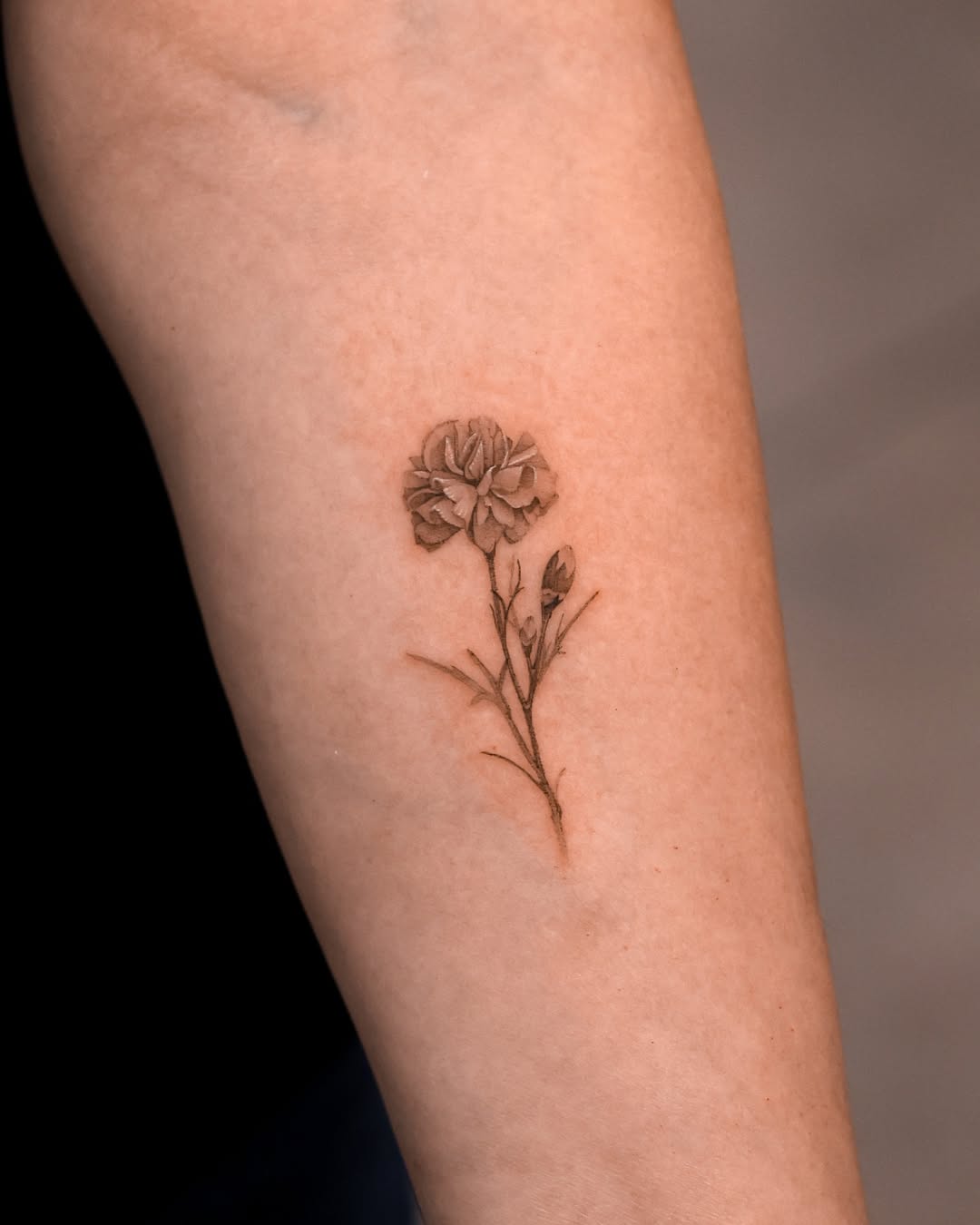

Contemporary microrealism artists I keep coming back to
Piotr Indulski (@piotrindulski) works in Warsaw at PRISM, a studio built around the intersection of design and tattooing. His tattoos have that same quality: clean composition, controlled detail, and a strong sense of what should be left out. There is a graphic designer’s discipline in them, but also a softness that keeps the work from feeling cold.
Paweł Indulski (@pawelindulski), also known as Dotyk, moves through black and grey, dotwork, linework, realism, and abstraction. His strongest pieces often rely on shadow, negative space, and restrained contrast rather than heavy outlines. The result is quiet yet intense: small tattoos that feel deeply atmospheric rather than just simply decorative.
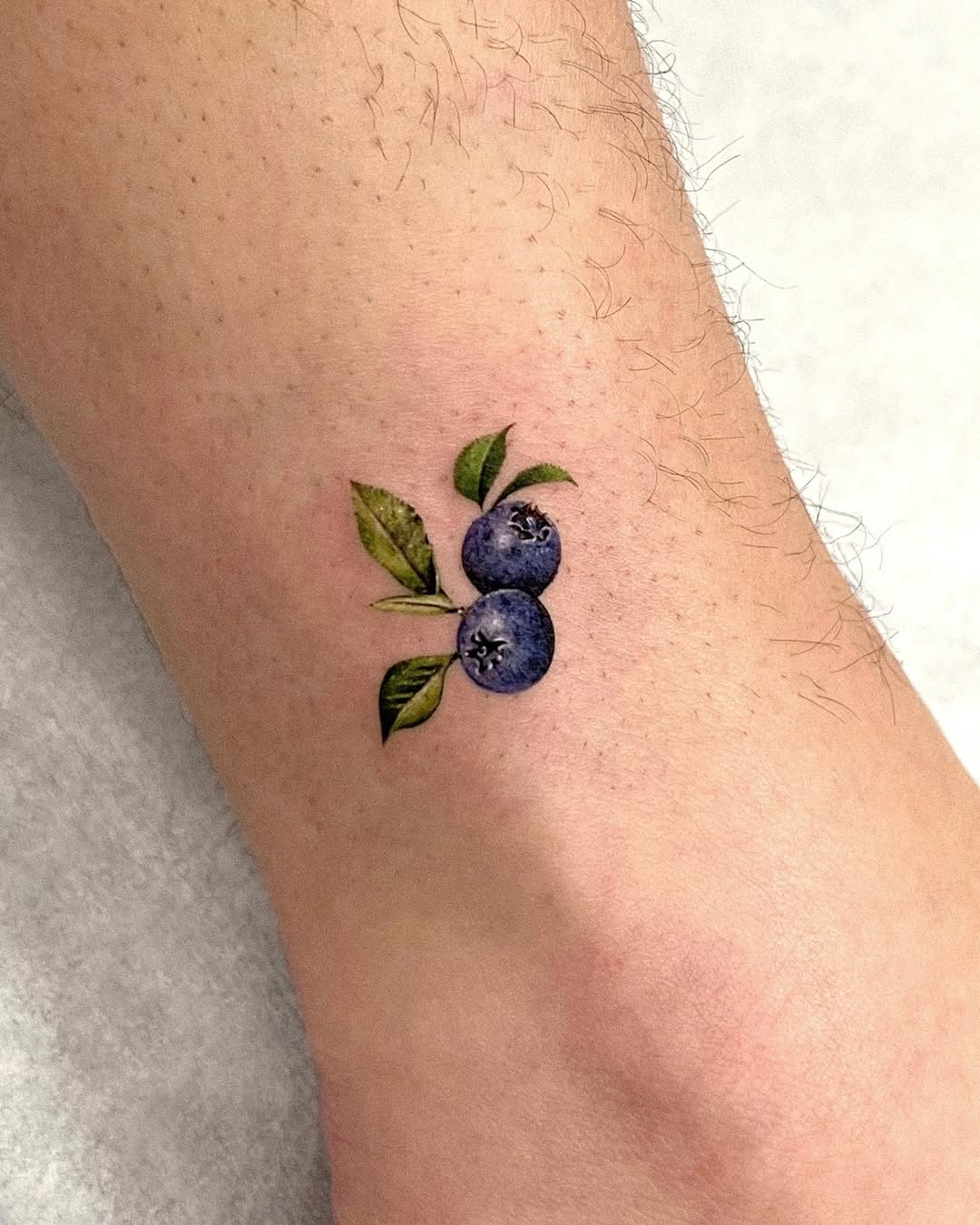
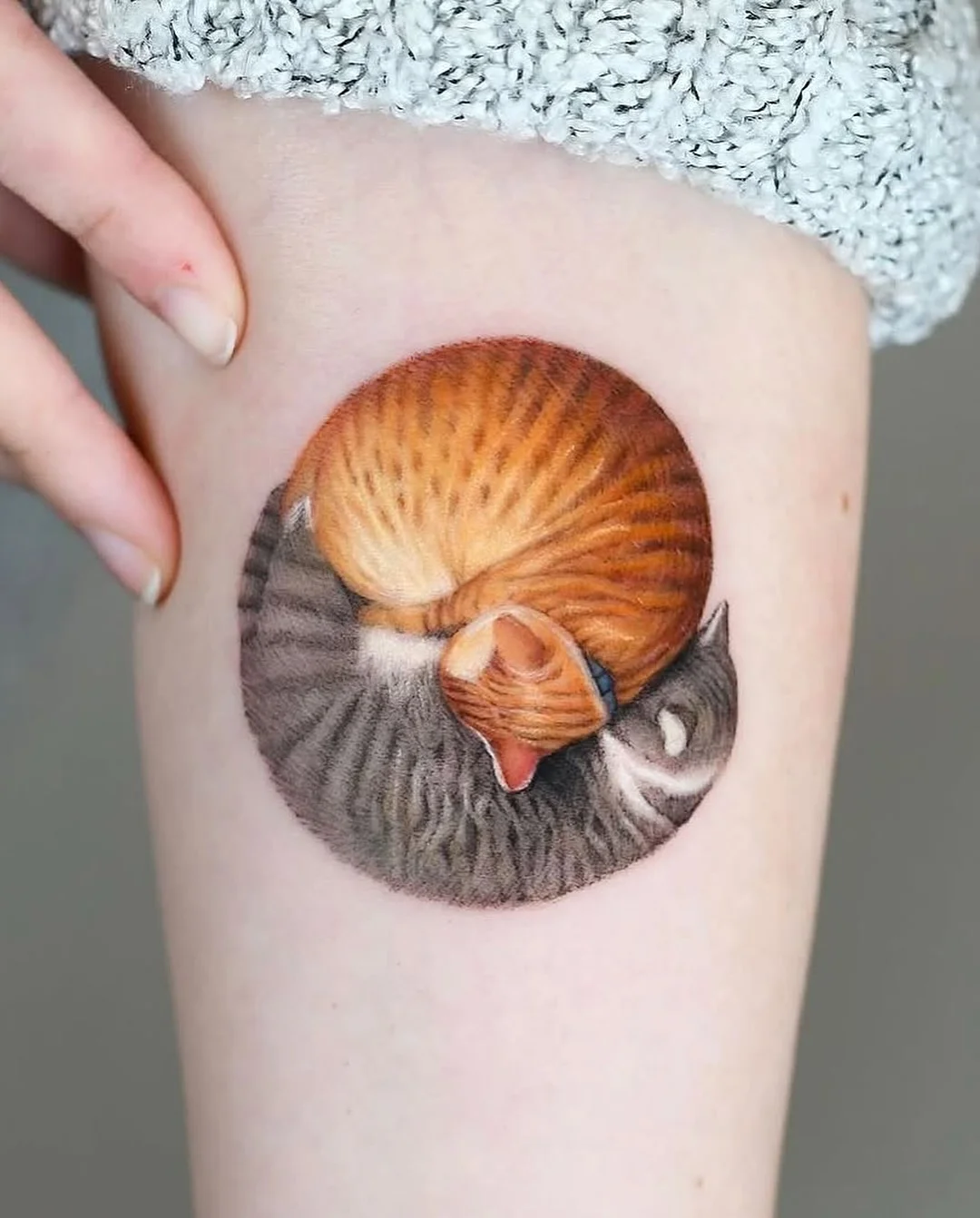
Edit Ben Gida (@edit_paints) is one of the clearest examples of colour microrealism pushed toward miniature painting. Her work often features portraits, insects, jewellery, surreal details, and references to famous art, with colour carefully layered at a very small scale.
Eva Karabudak (@evakrbdk) is great in miniature colour scenes, art-history references, circular micro-compositions, and painterly tattoos. Colossal describes her work as small, vivid renderings, including textured florals, realistic animals, and micro-paintings after artists such as Van Gogh and Magritte.
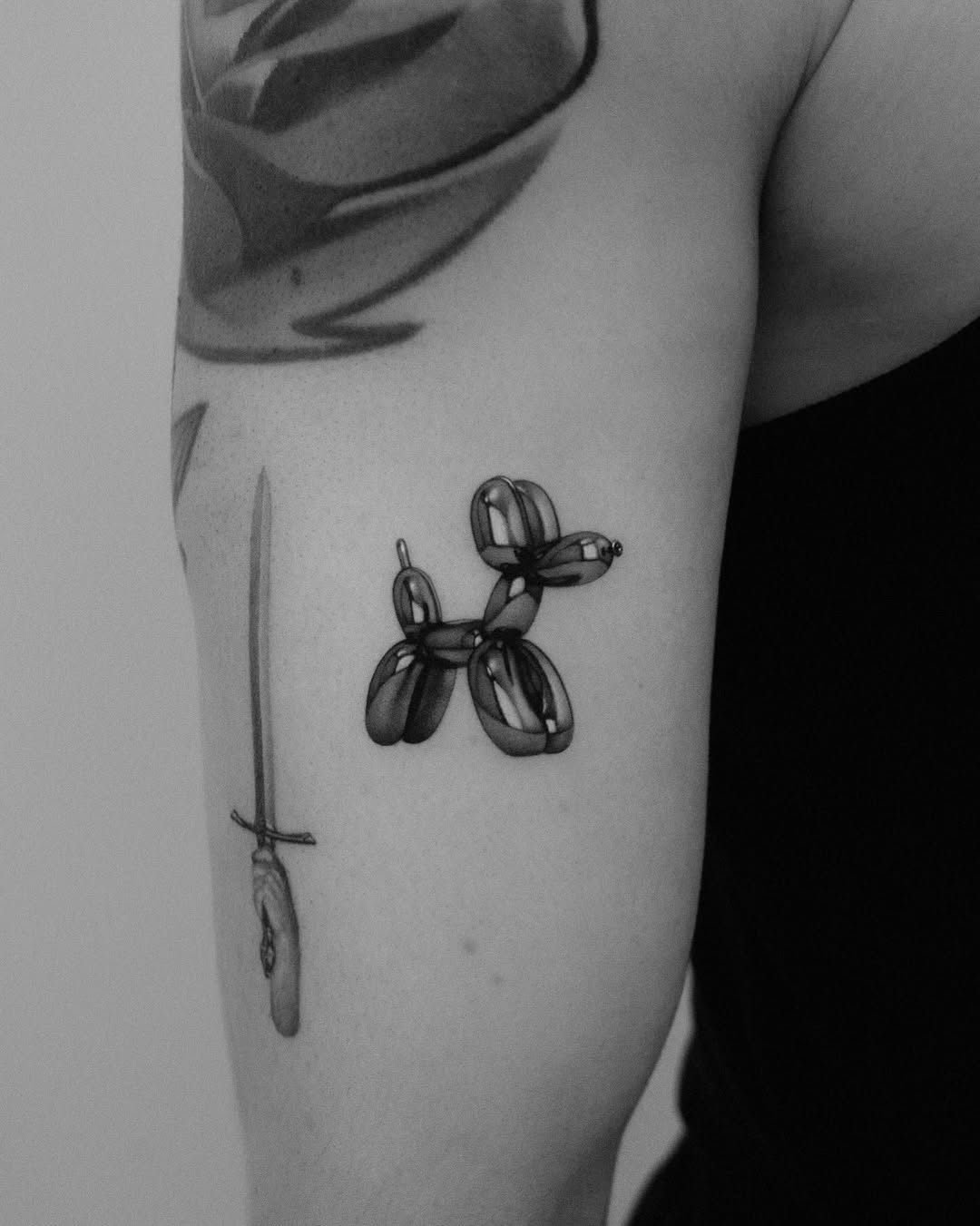
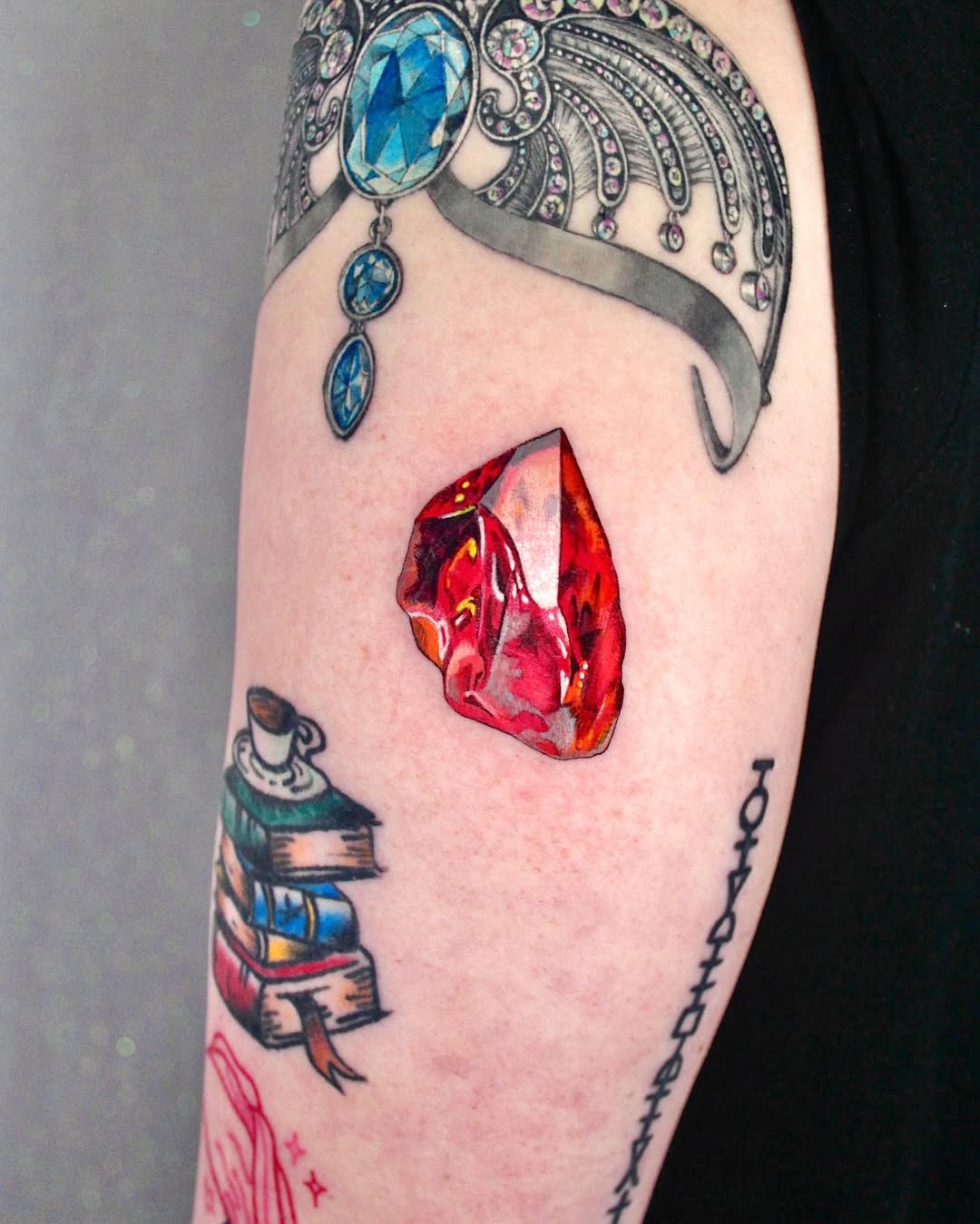
Jinah Shin / Solar (@tattooist_solar) works in the ornamental colour branch of microrealism. Her tattoos often look like tiny pieces of jewellery: crowns, brooches, swords, gemstones, charms, and royal objects rendered with fine-line precision and controlled colour.
Zee (@zeetattoo) is especially strong in microrealism floral tattooing: petals, stems, and botanical forms drawn with enough precision to feel delicate, but not so much detail that the tattoo stays light on the skin.
Ciotka Zu (@ciotka_zu_tattoo) brings graphic sensibility, but in colour. Her work sits closer to blackwork, linework, dotwork, and illustrative tattooing, but that is exactly why she belongs here. She shows another route into small tattooing: not photographic accuracy, but character, rhythm, and clarity.
Anya Tsyna (@tsyna) represents the jewel-like, high-precision side of contemporary microrealism. Her tattoos often look less like drawings than tiny objects placed on the skin: gemstones, ornaments, reflective surfaces, polished details. This is microrealism as illusion, built around light, shine, and texture.
Ageing and longevity
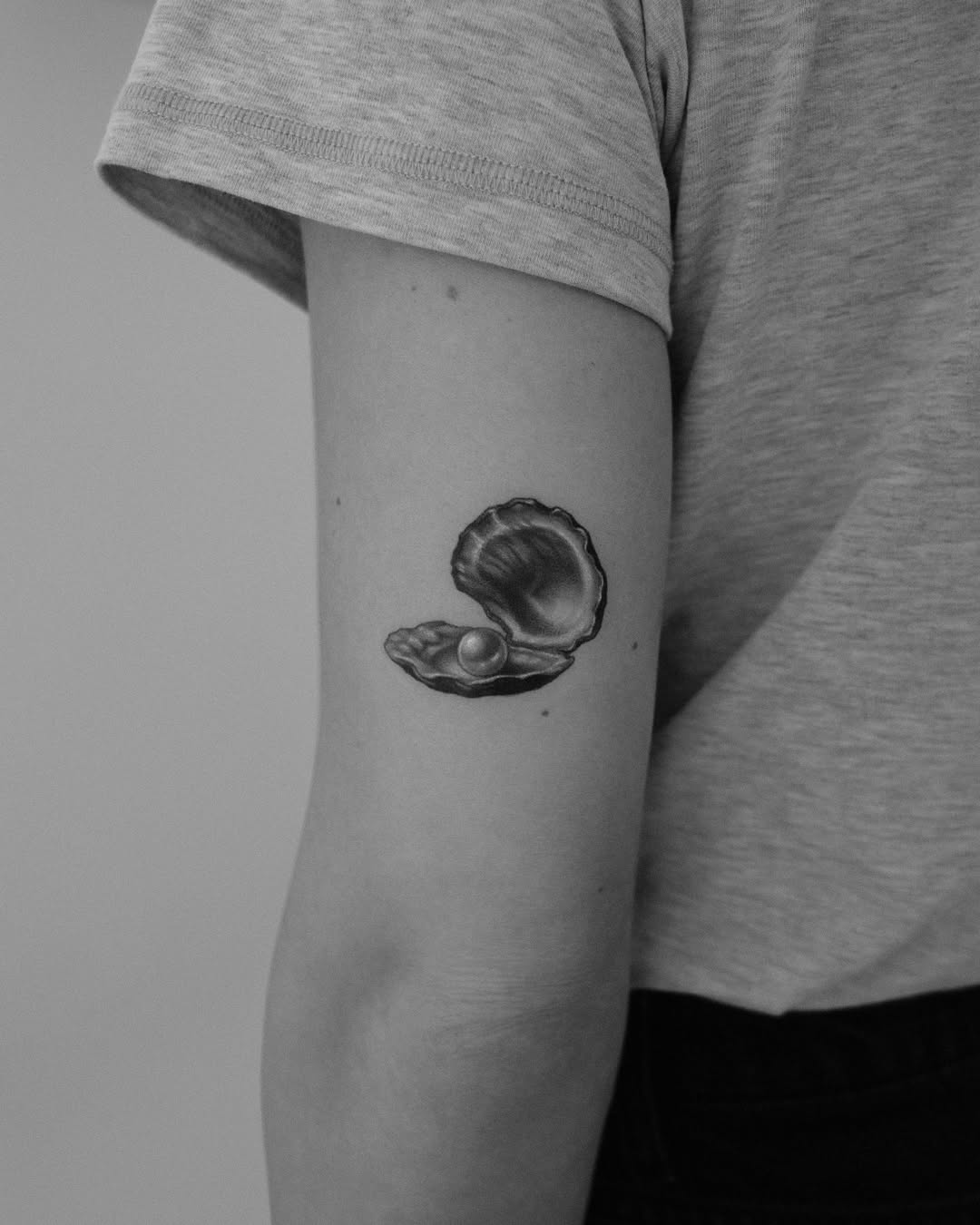
Tattoo pigment migrates outward over time. In a large realism piece, migration of a fraction of a millimetre produces a slight softening of detail while leaving the overall image intact. In a microrealism piece, the same absolute amount of migration represents a much larger proportion of the total image. A whisker that was one millimetre long when fresh can become a blurred smudge when the pigment has spread outward by half a millimetre in each direction. The same physical process that a large piece absorbs without damage can destroy a small piece.
This is not speculation. The earliest serious micro-realism work dates from approximately the mid-2010s, and the first generation of those pieces is now reaching the ten-year mark. The best of them are holding up — dimmer, softer, but still legible. The weaker pieces have lost significant detail. Pieces done in areas with high sun exposure, on hands, on the sides of fingers, on necks, have generally aged the worst.

What clients should know:
A micro-realism tattoo will almost certainly require touch-ups during its life. Many artists working in the style recommend revisiting the piece at the three-to-five-year mark to reinforce detail that has softened. Some clients are comfortable with this; others prefer to let the piece age. Either approach is defensible, but clients should know going in which one they are choosing.
The style photographs better than it ages. A fresh micro-realism piece looks its best in the first month, and some of what makes the piece impressive in that first month will not survive to year five. Clients drawn to the style by social media images should understand that most of those images are fresh work. Healed work at five or ten years circulates less widely, and a serious artist will make it available on request.
Placement matters more than in any other style. The best long-term locations for micro-realism are the inner upper arm, the back of the upper arm, the chest, and the upper back — low-sun, low-friction, stable areas. The forearm is acceptable but demanding. Hands, wrists, necks, and fingers are high-risk placements, and clients requesting micro-realism in those areas should have an honest conversation with the artist about what the piece will look like at five and ten years.
Size minimums are real. Most serious micro-realism artists have a minimum size below which they refuse to work, not because they cannot execute below it, but because the work will not last. An artist who happily agrees to anything regardless of size is not necessarily the safer choice.
Technical considerations
The craft demands in neo-traditional are different from those of the American traditional, and, in some ways, more difficult.
Colour theory becomes central. A neo-traditional piece with a palette of seven or eight tones has to hold together as a composition, and that means the artist needs working knowledge of how colours relate — complement, contrast, temperature, what pairs with what. Traditional work could succeed with a limited palette applied cleanly; neo traditional requires palette selection as a design skill.
Smooth gradient shading is technically demanding. It is built up in multiple passes, often with several needle configurations, and it requires the artist to maintain consistent pressure and depth across a large area. Patchy gradients heal patchy. The time required for a neo-traditional piece is often two to four times that of a comparably sized traditional piece, and the cost reflects this.
The outline work, though less visually dominant, still has to be impeccable. Because the rest of the piece is more detailed and more colour-rich, any failure in the line work sits within a more demanding context and is more easily noticed.
The longevity question is genuinely open. American tradition has proved its ageing behaviour over a century. Neo-traditional, as a coherent style, is perhaps twenty-five years old, and the longest-standing pieces are only now reaching the age where serious ageing becomes visible. The early evidence is mostly good — the heavy outline and the intentional palette both help — but pieces with extensive desaturated-colour fills, very fine internal detail, or heavy reliance on white highlights are already showing the kinds of softening that suggest careful choices matter. A neo-traditional piece done well will probably age better than a photorealistic one and less gracefully than a classic American traditional piece.
Practical considerations for clients
Look at healed photographs. This is the same advice that applies to all realism, but it applies more strongly here. A good micro-realism artist will have healed images from one, three, five, and sometimes ten years out. Ask to see them.
Accept the artist’s reference judgment. If an artist in the style suggests a different reference image, composition, or placement than what you came in requesting, the suggestion is usually worth taking seriously. Micro-realism is a style in which the artist’s technical experience with what works on skin at a small scale takes precedence over the client’s attachment to a specific source image.
Budget accordingly. Good micro-realism is time-intensive, requires specialist skills, and is offered by artists with long waiting lists. Prices are correspondingly high, and travel may be involved if no local artist works at the level you want. Pricing significantly below market rate for comparable work is a warning sign.
Understand the timeline. Top micro-realism artists book six months to two years out. Shorter waiting lists are possible with less established artists, but the trade-off in skill level is real.
Know what you are buying. A micro-realism tattoo is, at its best, an extraordinary piece of technical work that will look remarkable for its first several years and progressively less remarkable over its subsequent decades. It is not a forever-sharp image, and no tattoo in any style is. Clients who want an image that stays precisely as it was on day one are better served by a different style or by a willingness to touch it up periodically.
Microrealism tattooing today
What is already clear is that the style has expanded what is possible at small scales in realism tattooing, and that the best practitioners working in it are producing work that was not achievable fifteen years ago. Whether that expansion produces a durable body of work that holds up over the decades, or a visually striking chapter in the longer history of the craft, will depend on how the first generation of pieces ages and on whether the touch-up culture that currently sustains them remains practical in the long term.
Sources & further reading
- Freddy Negrete with Steve Jones, Smile Now, Cry Later: Guns, Gangs, and Tattoos — My Life in Black and Gray. Seven Stories Press, 2016.
- Margo DeMello, Bodies of Inscription: A Cultural History of the Modern Tattoo Community. Duke University Press, 2000.
- Anna Felicity Friedman, The World Atlas of Tattoo. Yale University Press, 2015.
- Estevan Oriol and Mister Cartoon, L.A. Woman. Drago, 2009.
- Journal of Tattoo Studies. University of California Press, launched in 2022.